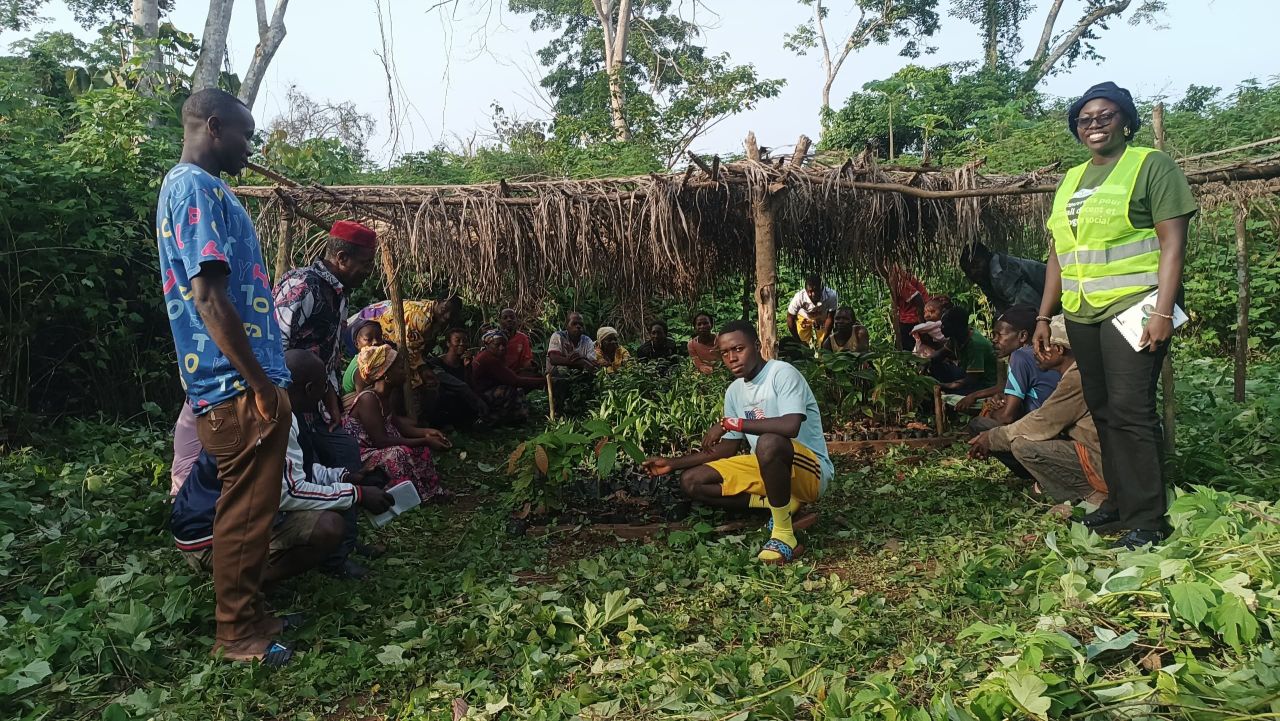
DENG DENG, EAST REGION, CAMEROON In the verdant landscapes surrounding the Deng Deng National Park and the expansive Lom Pangar Hydroelectric Dam, a quiet revolution is growing. Here, in Hona village, the future of conservation is being rewritten not by fences, but by integration. With the generous support of the Global Greengrants Fund, Action for Conservation and Environmental Sustainability (ACES) is celebrating the resounding success of a pioneering pilot project: The Farm Forestry Initiative.
Traditionally, smallholder farmers in the region have faced a difficult choice: expand their farmland to sustain their families, often through practices that encroach on the critical buffer zones of the national park, or struggle with limited and climate-vulnerable incomes. Our initiative presented a powerful third way—a model of coexistence where economic prosperity and ecosystem health grow side-by-side.
Sowing the Seeds of Change
The project engaged 50 dedicated smallholder farmers in Hona, transforming their parcels of land into multifunctional agroforestry systems. Instead of clearing land, we enriched it. A total of 1,500 high-value economic tree seedlings—selected for their adaptability, market potential, and ecological benefits—were carefully integrated directly into existing farmlands. These aren’t just trees; they are long-term investments in resilience.
A Triple Win for People, Climate, and Conservation
The Farm Forestry Initiative was designed to create a cascade of positive impacts, and the early results confirm a powerful triple-win outcome:
1. Diversifying Incomes & Boosting Livelihoods
For generations, families have depended on seasonal crops. By introducing trees like fruit species (mango, avocado, plum), native timber, and medicinal plants, we are helping farmers build a diversified economic portfolio. These trees provide alternative harvests, create new market opportunities, and act as a “living savings account” that matures over time, directly boosting household financial security and reducing vulnerability to a single crop failure.
2. Strengthening Climate & Ecosystem Resilience
The integrated trees do more than provide income; they actively heal and protect the land. Their root systems prevent soil erosion on slopes near the Lom Pangar watershed. Their canopy provides shade for crops and livestock, mitigating the impacts of increasing temperatures. Crucially, by offering a sustainable source of timber, fruit, and other products from their own farms, the project significantly reduces the economic pressure on the nearby Deng Deng National Park. This directly curbs unsustainable practices like slash-and-burn agriculture and illegal logging, creating a natural buffer zone that protects biodiversity.
3. Fighting Climate Change, Tree by Tree
Every seedling planted is a soldier in the fight against climate change. This nascent forest of 1,500 trees is now a living carbon sink, actively sequestering CO2 from the atmosphere. Furthermore, these trees enrich the soil, promote water retention, and stabilize local micro-ecosystems, making the entire landscape more robust in the face of climatic shifts.
The Voice of the Community
“Before, we looked at the forest for everything. Now, we are growing a small forest of our own that gives us what we need,” shares Mr. Armand Bissou, one of the participating farmers. “These trees mean my children’s school fees and a healthier farm. It feels good to protect the big forest by caring for the trees on my land.”
A Model for the Future
The Hona village pilot is more than a success story; it’s a blueprint. It demonstrates that the most effective conservation strategy is one that aligns directly with community well-being. By valuing and strengthening the symbiotic relationship between people and their environment, we create solutions that are sustainable by design.
ACES extends its deepest gratitude to the Global Greengrants Fund for their visionary partnership and to the resilient community of Hona for their unwavering commitment. Together, we are proving that when we invest in both people and trees, the roots of change run deep, fostering a legacy of abundance for generations to come.
This project aligns with ACES’s core commitments under our Ethics & Integrity and Gender Policies, ensuring inclusive participation, equitable benefits, and respectful community-led implementation.